Dementia Action Manual · Book 2
Calmer evenings, quieter nights, and sleep for you
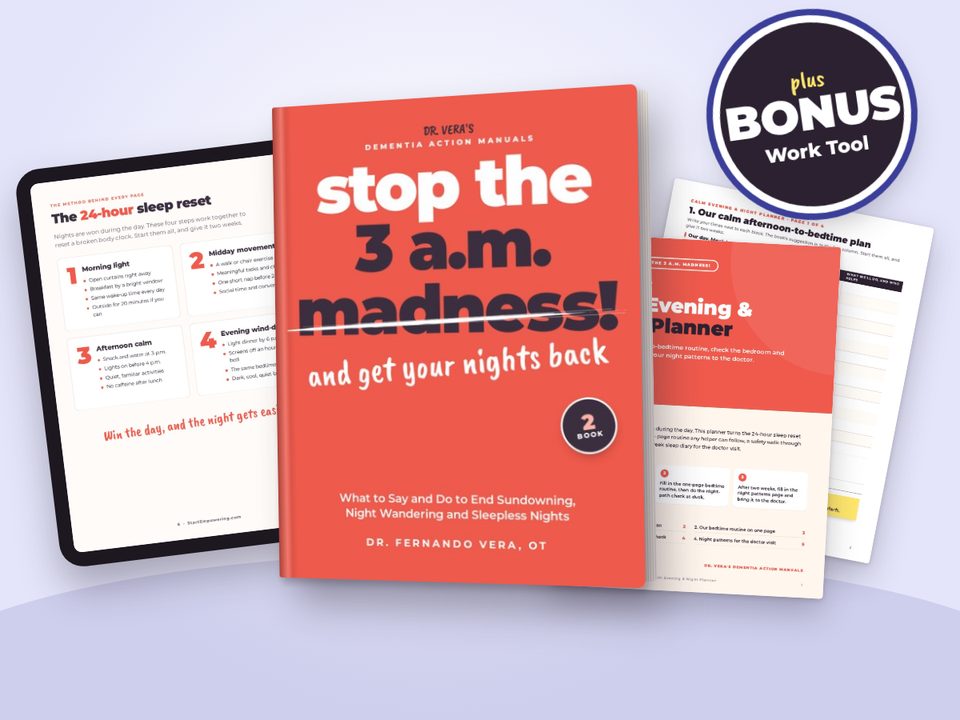
Stop the 3 A.M. Madness! What to Say and Do to End Sundowning, Night Wandering and Sleepless Nights
What to say and do for 25 night problems, from the 4 p.m. crash to 3 a.m. wandering. Plus a 24-hour sleep reset you can start tomorrow morning.
One payment. Instant download. 30-day money-back guarantee.
- 25 night problems, afternoon to 3 a.m.
- 100 tonight-and-tomorrow steps
- By a licensed occupational therapist
Sound familiar?
You love them. But the nights are wearing you down.
- At 4 p.m., the mood drops and small requests turn into big fights.
- As the sun goes down, they pack a bag to "go home."
- At 2 a.m., they're dressed for a job they retired from years ago.
- They call your name over and over after lights out.
- You hear a door in the middle of the night, and your heart stops.
- You haven't had a full night's sleep in weeks, and it shows.
It's not your fault. Nobody told you that nights are won during the day.
The shift that changes everything
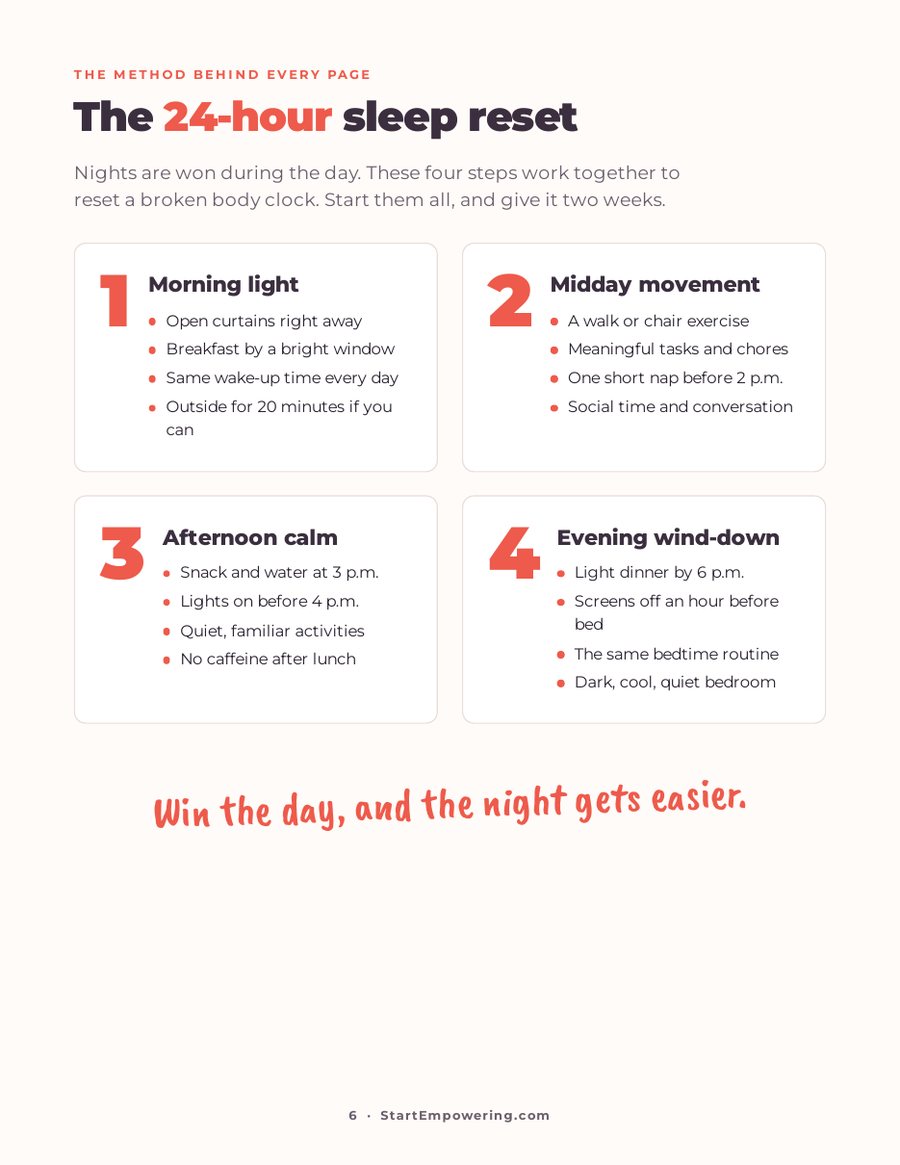
Nights are won during the day.
Morning light, daytime activity, a calm afternoon and a steady bedtime routine can reset a body clock that dementia has thrown off. And at night, you keep it dark, quiet and boring. Here's how it sounds:
The problemThey get dressed for work in the middle of the night
The office called. You have the day off.
You retired years ago. Go back to bed.
Why it works: Joining their reality ends the rush faster than correcting.
The problemThey refuse to go to bed
Let's get cozy. Let's put on your soft pajamas.
It's late. Go to bed now.
Why it works: An invitation to comfort beats a command.
The problemThey see someone in the bedroom at night
I don't see it, but I believe you. I'll keep you safe.
There's nobody there. Go to sleep.
Why it works: Their fear is real. Often the 'stranger' is a coat or a shadow, so turn on a lamp and look.
Look inside
Check it. Fix it. Follow up.
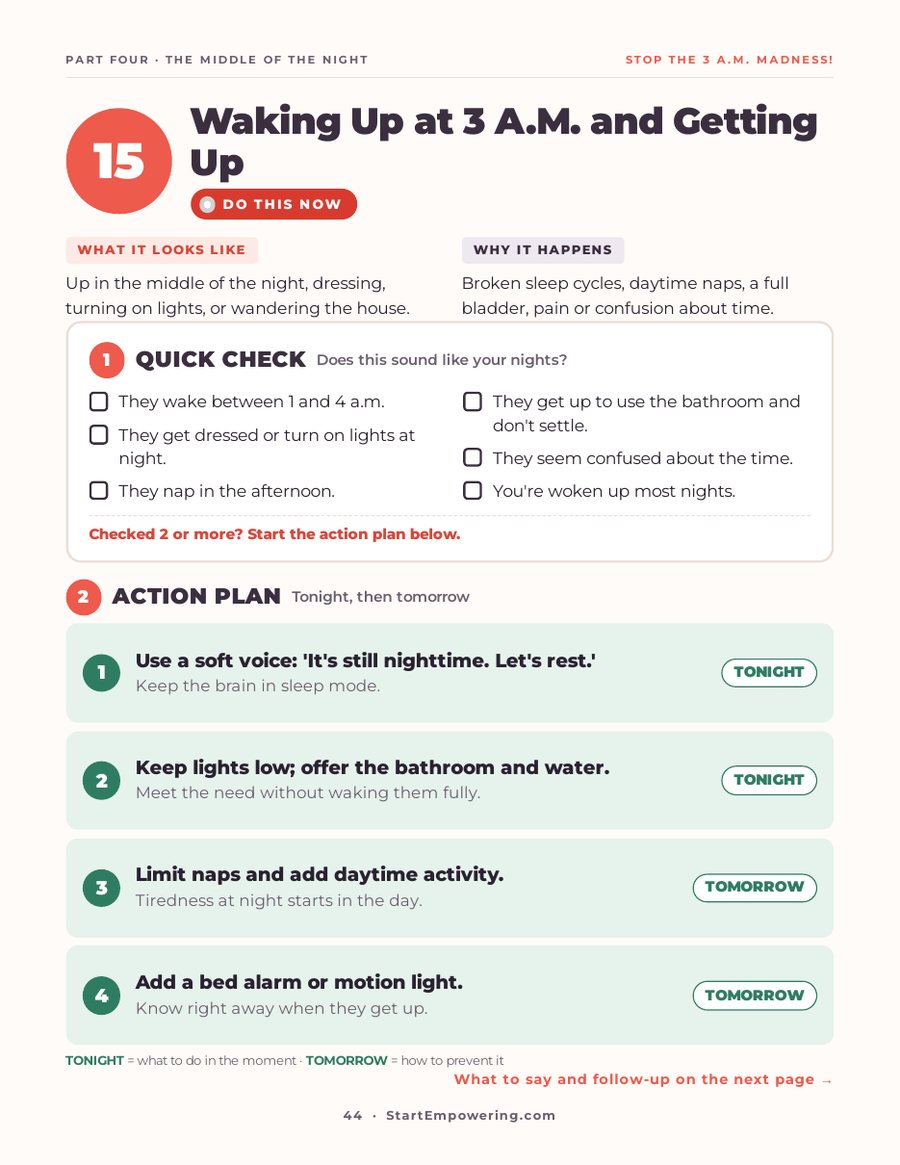
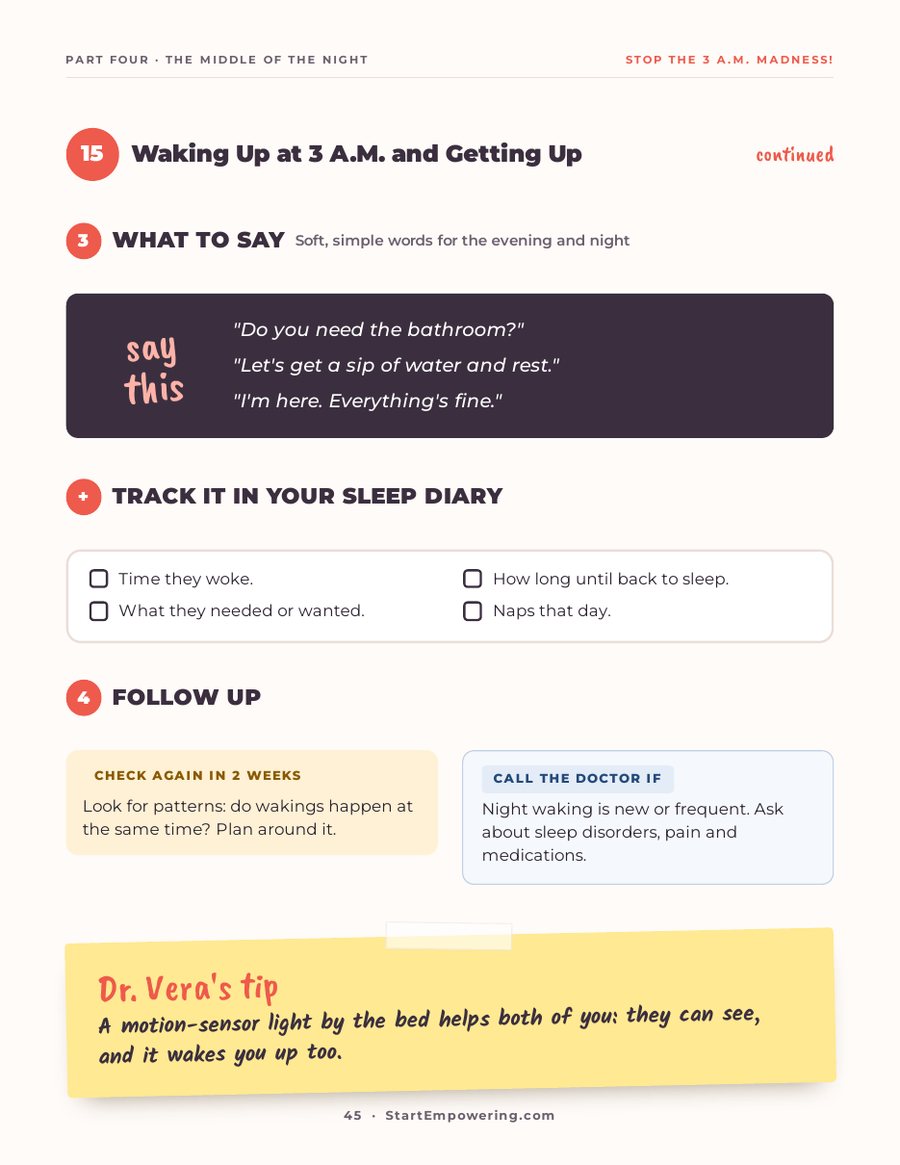
Every night problem gets a two-page spread. The left page helps you spot the problem and gives you a plan for tonight and tomorrow. The right page gives you the words to say, what to track and when to check again.
Tap a page to see it full size.
- A quick check to see if the page fits your nights
- Two steps for tonight and two for tomorrow
- Word-for-word phrases to use right away
- What to write in your sleep diary
- When to check again and when to call the doctor
Without a plan
- Every evening turns into tears or anger
- You argue at 3 a.m., and nobody goes back to sleep
- You reach for a 'PM' pill and hope for the best
- You lie awake listening for the front door
- You run on empty, night after night
With Stop the 3 A.M. Madness!
- You head off the 4 p.m. crash with a 3 p.m. pit stop
- You use soft words that keep the brain in sleep mode
- You check for pain, bathroom and medical causes first
- You add lights, door chimes and a bed alarm so you can rest
- You have a plan for your own sleep and for overnight help
This manual is for you if…
- You care for a parent, spouse or loved one with dementia who struggles in the evening or at night
- Late afternoons bring confusion, pacing or 'I want to go home'
- You're woken up most nights, or worry they'll leave the house
- You want clear steps for tonight, not theory
- You need sleep too, and you're close to your limit
It's not for you if…
- You're looking for a diagnosis or a sleeping pill to try
- You want a cure or a promise to reverse dementia
- You'd rather keep searching online at 3 a.m.
Write the bedtime routine on one page and any helper, family member or overnight aide can follow it the same way you do.
Everything inside
Is your night covered?
25 night problems in five parts, from the late afternoon to your own exhaustion. Tap any one to see what's inside, and try one of the 3 free tips tonight.
Understand the Night 4
- Sundowning: Late-Afternoon Confusion and Agitation
- Days and Nights Mixed Up
- Too Much Napping
- Hidden Medical Causes of Bad Nights
The Afternoon Defense 5
- The 4 P.M. Crash
- Fading Light and Shadows
- Busy, Noisy Evenings
- "I Want to Go Home" at Dusk
- Pacing and Restlessness Before Dinner
The Wind-Down 5
- Refusing to Go to Bed
- Nighttime Bathroom Trips and Accidents
- Caffeine, Sugar and Late Meals
- Screens and Upsetting TV at Night
- Anxiety and Fear at Bedtime
The Middle of the Night 7
- Waking Up at 3 A.M. and Getting Up
- Nighttime Wandering and Trying to Leave
- Getting Dressed for Work or Appointments at Night
- Calling Out, Yelling or Moaning at Night
- Nightmares and Waking Up Scared
- Acting Out Dreams: Kicking or Punching in Sleep
- Seeing Things in the Dark
Protect Your Sleep 4
- Sleeping Pills and "PM" Medications
- Melatonin and Natural Sleep Aids
- Getting Your Own Sleep
- Getting Overnight Help
Try these tonight
Treat 3 p.m. like a pit stop: snack, water, bathroom, music.
Why: Five minutes can save the evening.
Leave the bathroom light on and the door open.
Why: A glowing doorway is the easiest map at night.
Hang a dark curtain over the front door at night.
Why: Many people with dementia won't look for a door they can't see.
Bonus with your order
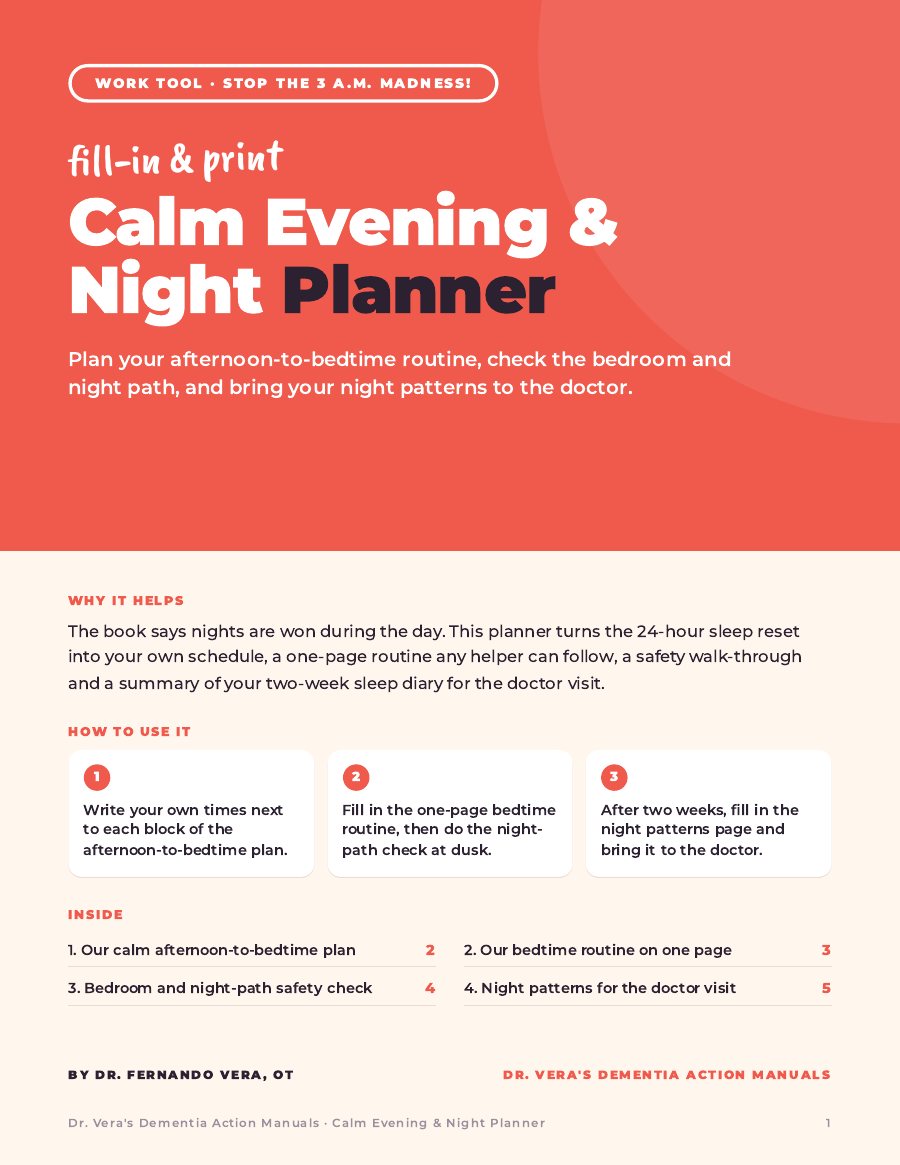
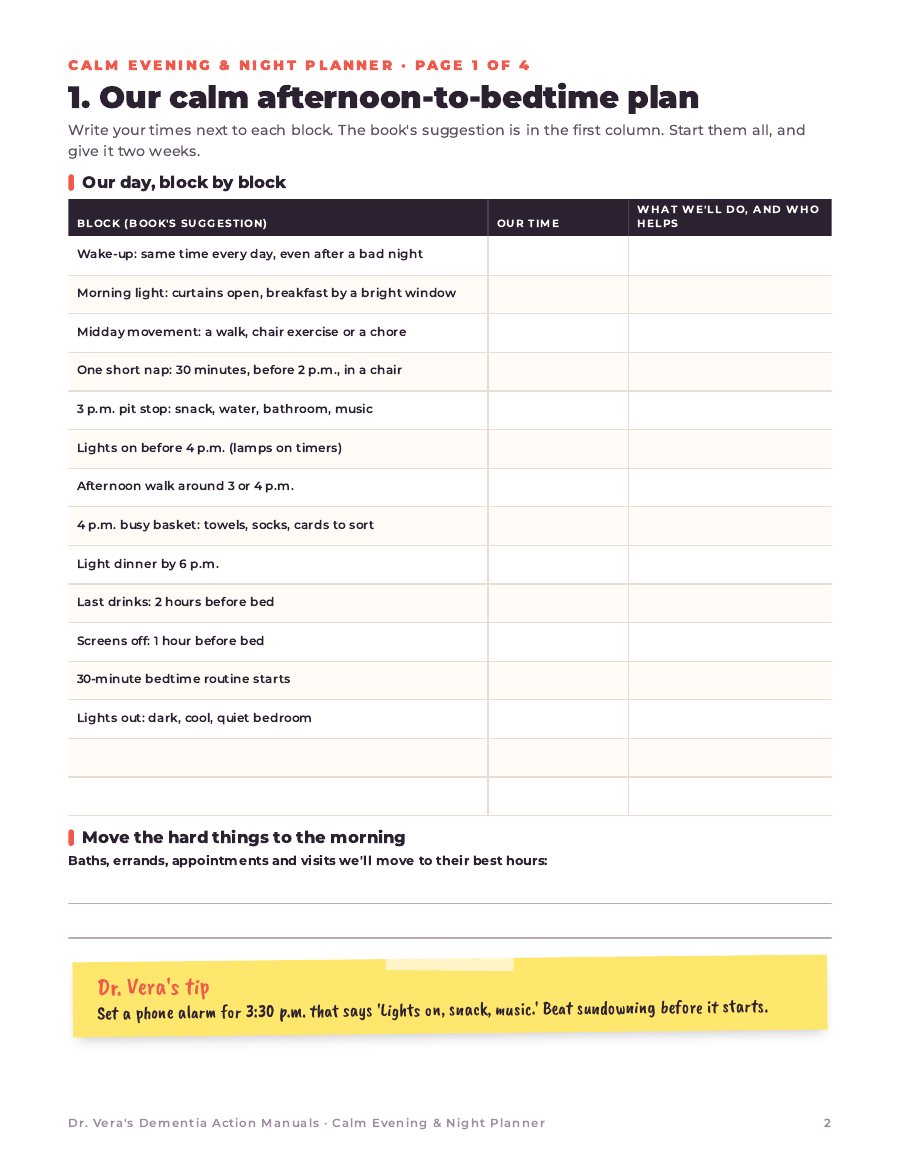
Calm Evening & Night Planner
Plan your afternoon-to-bedtime routine, check the bedroom and night path, and bring your night patterns to the doctor.
The book says nights are won during the day. This planner turns the 24-hour sleep reset into your own schedule, a one-page routine any helper can follow, a safety walk-through and a summary of your two-week sleep diary for the doctor visit.
Inside the work tool:
- 1. Our calm afternoon-to-bedtime plan
- 2. Our bedtime routine on one page
- 3. Bedroom and night-path safety check
- 4. Night patterns for the doctor visit
Fill-in PDF. Print it, or fill it in on a tablet.

Meet your guide
Dr. Fernando Vera, OT
Licensed occupational therapist and dementia educator in The Woodlands, Texas. He helps families through dementia challenges every week.
His mother, Virginia, was healthy and active when she was diagnosed with a fast-moving dementia. Even with his training, some days he didn't know what to say. These manuals are the answers he wished he'd had.
Everything you get
Stop the 3 A.M. Madness!
What to Say and Do to End Sundowning, Night Wandering and Sleepless Nights
- The complete 70-page manual
- 25 night problems, each with a two-page spread
- 100 tonight-and-tomorrow steps plus word-for-word phrases
- The 24-hour sleep reset and a printable two-week sleep diary
- BONUS: Calm Evening & Night Planner (fill-in work tool)
$17 one-time payment · instant download
One payment. Instant download. 30-day money-back guarantee.
- 30-day money-back guarantee
- Instant PDF download
- Pay once, no subscription
Try it for 30 days. All the risk is on me.
Use it at home. If it doesn't help you handle hard moments with more confidence, email us within 30 days for a full refund. No forms, no hard feelings, and you keep the bonus work tool.
Dr. Fernando Vera, OT
Questions
Before you buy
Is this a physical book?
It's a digital PDF you can download right away, read on any device, or print at home or at a print shop.
Can I read it on my phone?
Yes. The PDF opens on any phone, tablet or computer. Keep it on your phone for the middle of the night, and print the sleep diary and the pages you use most.
I don't have time to read a whole book.
You don't have to. Start with the 24-hour sleep reset on page 6. Then open to the night problem you're facing. Each one fits on two pages: a quick check, a plan and the words to say.
Will it help at every stage?
It's built around night problems rather than stages, so you use the pages that match what's happening now, from sundowning to waking at 3 a.m. to falling out of bed. Come back to it as things change.
How is this different from free advice online?
Online tips are scattered and often generic. This is one organized manual by an occupational therapist who runs a dementia clinic, with a plan for tonight and tomorrow for 25 specific night problems, and when to call the doctor for each.
Can I share it with my family?
Yes, please share it with the family members and aides who help with evenings and nights, so everyone follows the same routine and uses the same calming words. Please don't post or resell it publicly.
Is this medical advice?
No. It's practical, educational guidance from an occupational therapist. It starts with checking for medical causes, tells you when to call the doctor on every topic, and asks you to talk with the doctor or pharmacist before giving any sleep aid or supplement.
What if it doesn't help?
You're covered by a 30-day money-back guarantee. Email us within 30 days for a full refund, and keep the bonus.
Ready for calmer nights?
Stop the 3 A.M. Madness! plus the bonus work tool, as an instant download.
Education, not medical advice. Written by Dr. Fernando Vera, a licensed occupational therapist and dementia educator who helps families through dementia challenges.
Goes well with
More tools for the same problem.
 Free
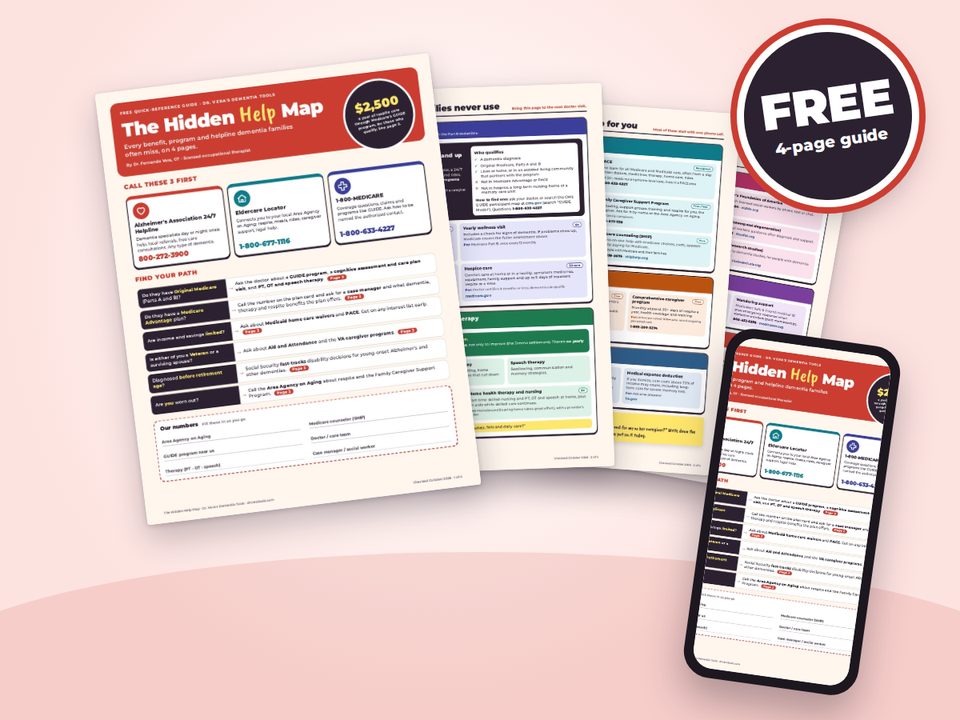
Find the help you may be missing
The Dementia Resource Map
Every benefit, program and helpline dementia families often miss: Medicare's GUIDE program, VA benefits, Medicaid home care and more, in large, easy-to-read print.
 Free
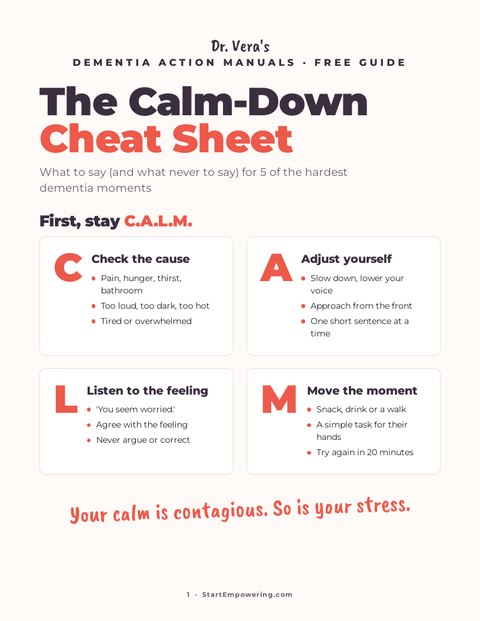
What to say in 5 of the hardest moments
The Calm-Down Cheat Sheet
What to say, and what never to say, in five of the hardest moments. Print it for the fridge.
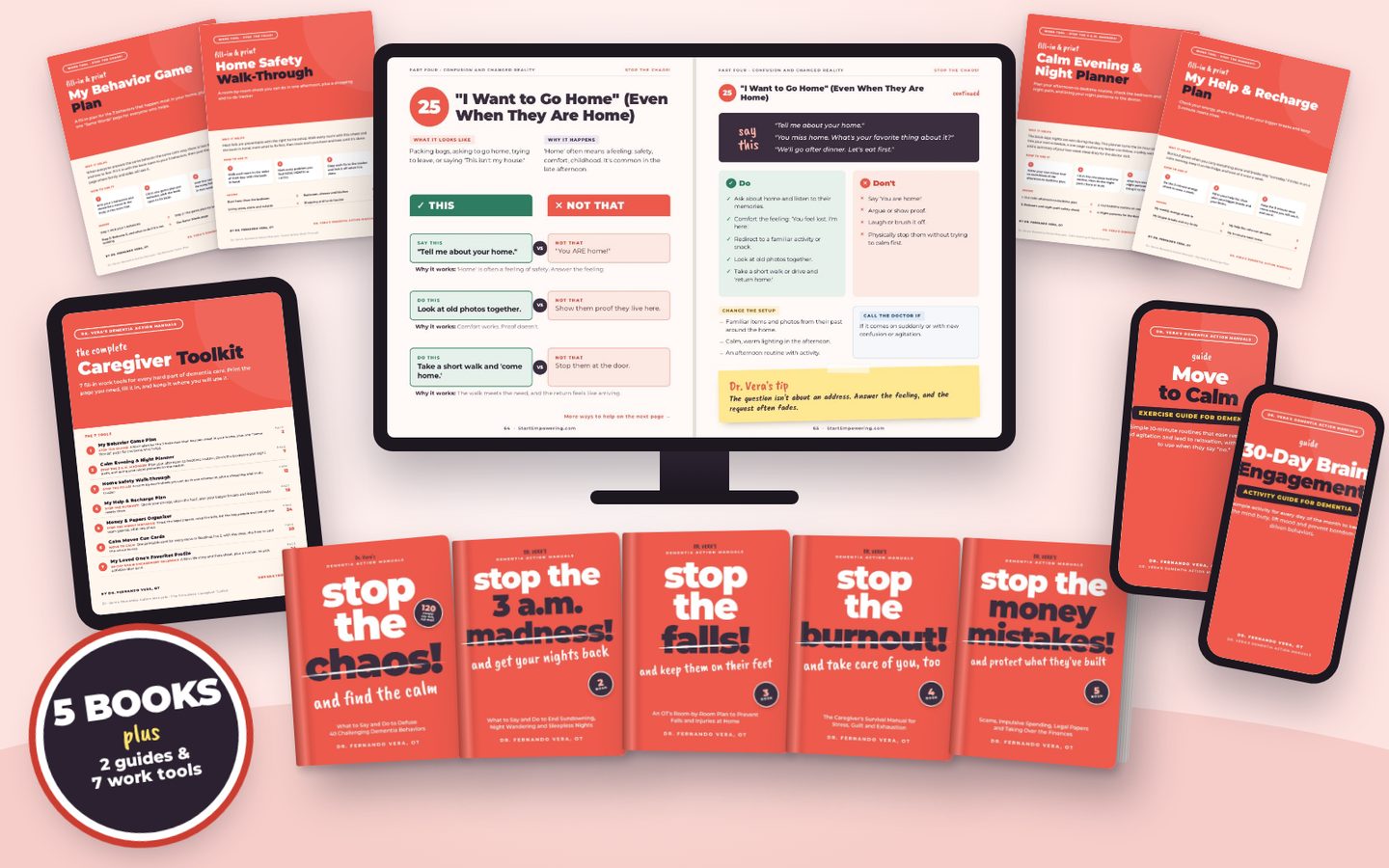
All five manuals, one for each hard part
The Five-Book Collection
All five manuals: behaviors, nights, falls, your own stress and money.
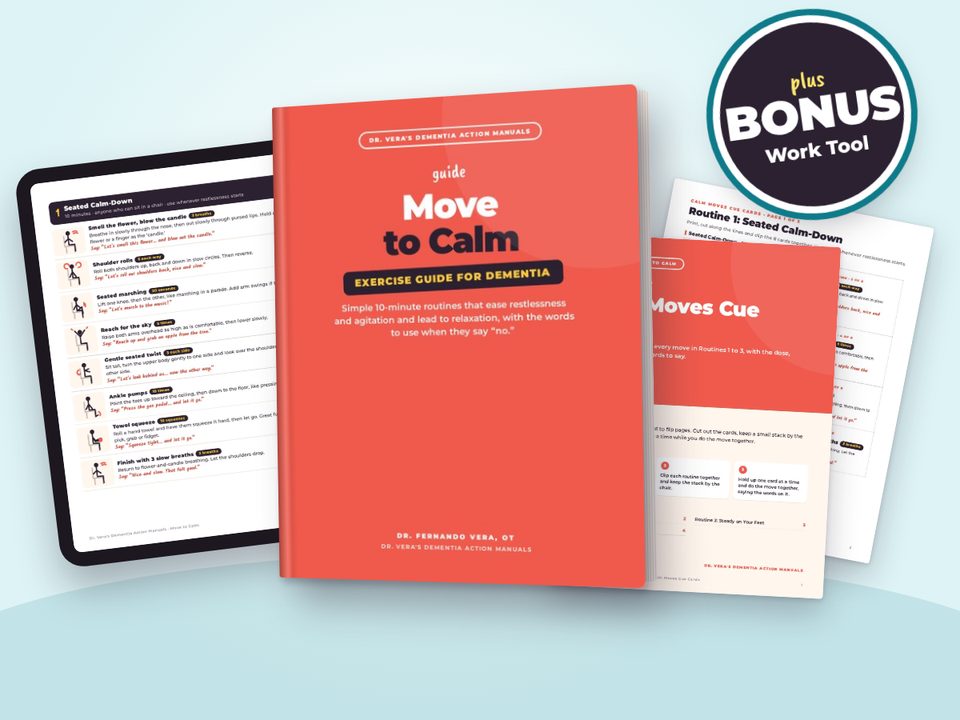
The 10-minute calm-down for restless days
Move to Calm
Five 10-minute routines that ease restlessness and agitation, from a seated calm-down to a bed-level routine.