Dementia Action Manual · Book 1
Know exactly what to say when dementia behaviors hit
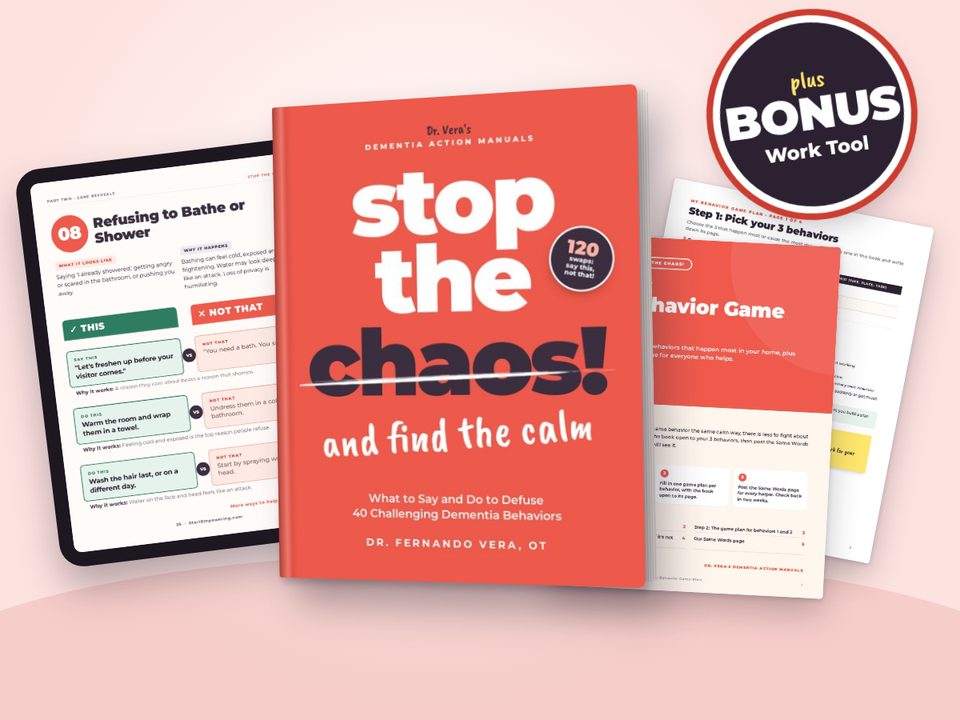
Stop the Chaos! What to Say and Do to Defuse 40 Challenging Dementia Behaviors
Word-for-word answers for 40 hard moments, from bath refusals and wandering to sundowning and "I want to go home." Open to the behavior, read the left page, and try the first swap in about 30 seconds.
One payment. Instant download. 30-day money-back guarantee.
- 120 word-for-word swaps
- 40 behaviors, each on a two-page spread
- By a licensed occupational therapist
Sound familiar?
You love them. But some days, it feels like a war.
- A simple bath turns into a shouting match.
- The same question comes again and again, all day long.
- In the late afternoon, everything falls apart.
- They pack a bag to "go home," and they are home.
- You correct them, and they get angrier.
- You end the day exhausted, and then you feel guilty.
It's not your fault. Nobody ever told you what to say.
The shift that changes everything
Every behavior is a message.
Pacing might mean pain. Refusing a bath might mean fear. Answer the message instead of the behavior, and the chaos gets smaller.
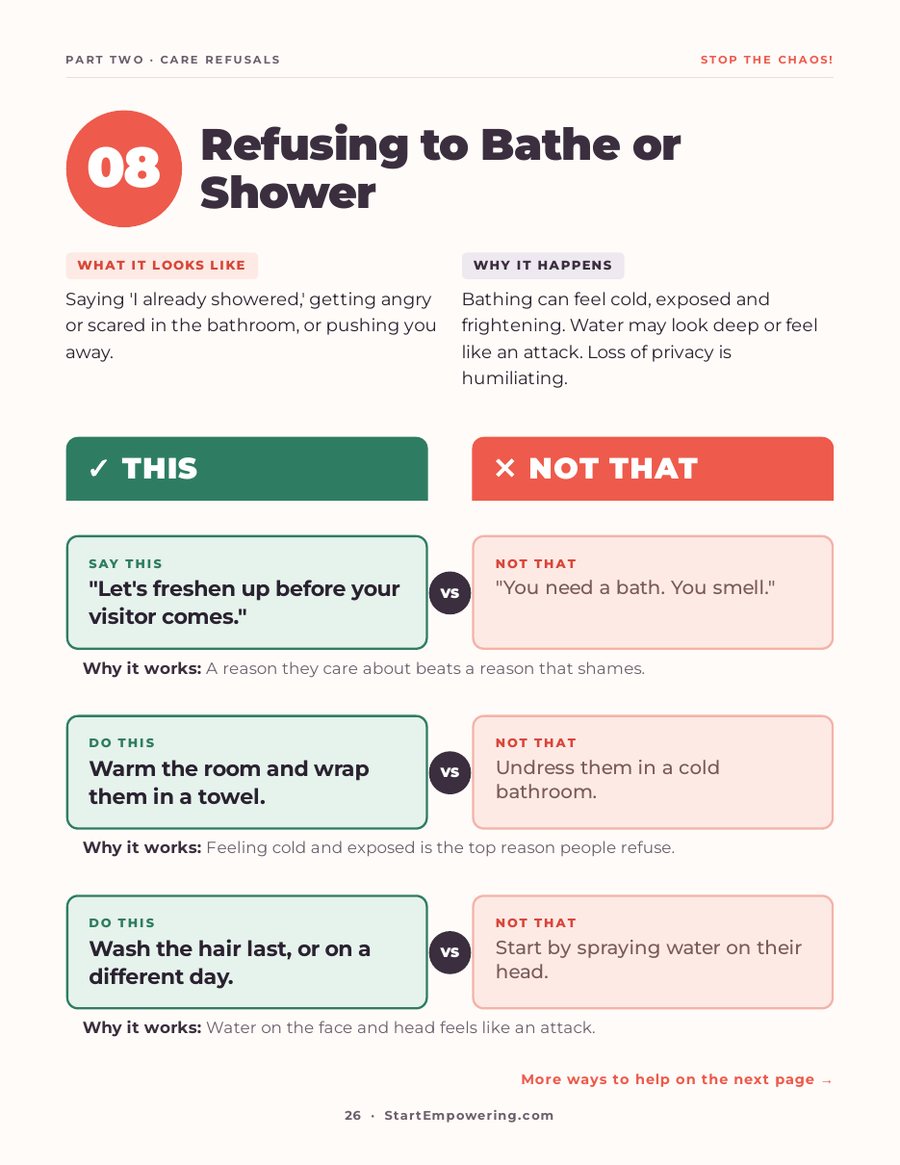
The problemThey refuse to bathe or shower
Let's freshen up before your visitor comes.
You need a bath. You smell.
Why it works: A reason they care about beats a reason that shames.
The problemThey say "I want to go home" (and they are home)
Tell me about your home.
You ARE home!
Why it works: 'Home' is often a feeling of safety. Answer the feeling.
The problemThey keep asking for a parent who has passed away
You're thinking about your mom. Tell me about her.
Your mother died years ago.
Why it works: Hearing it again can feel like brand-new grief.
Look inside
Every behavior gets a two-page spread.
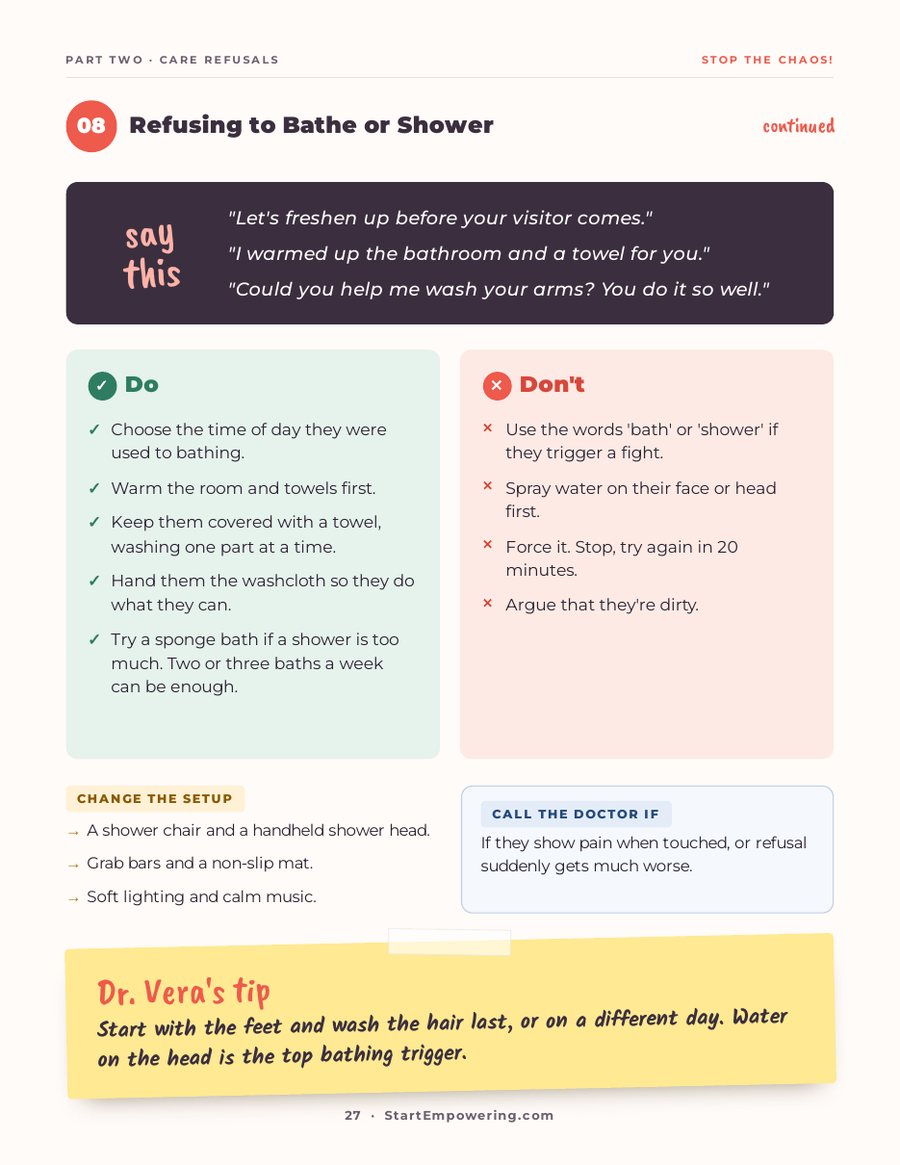
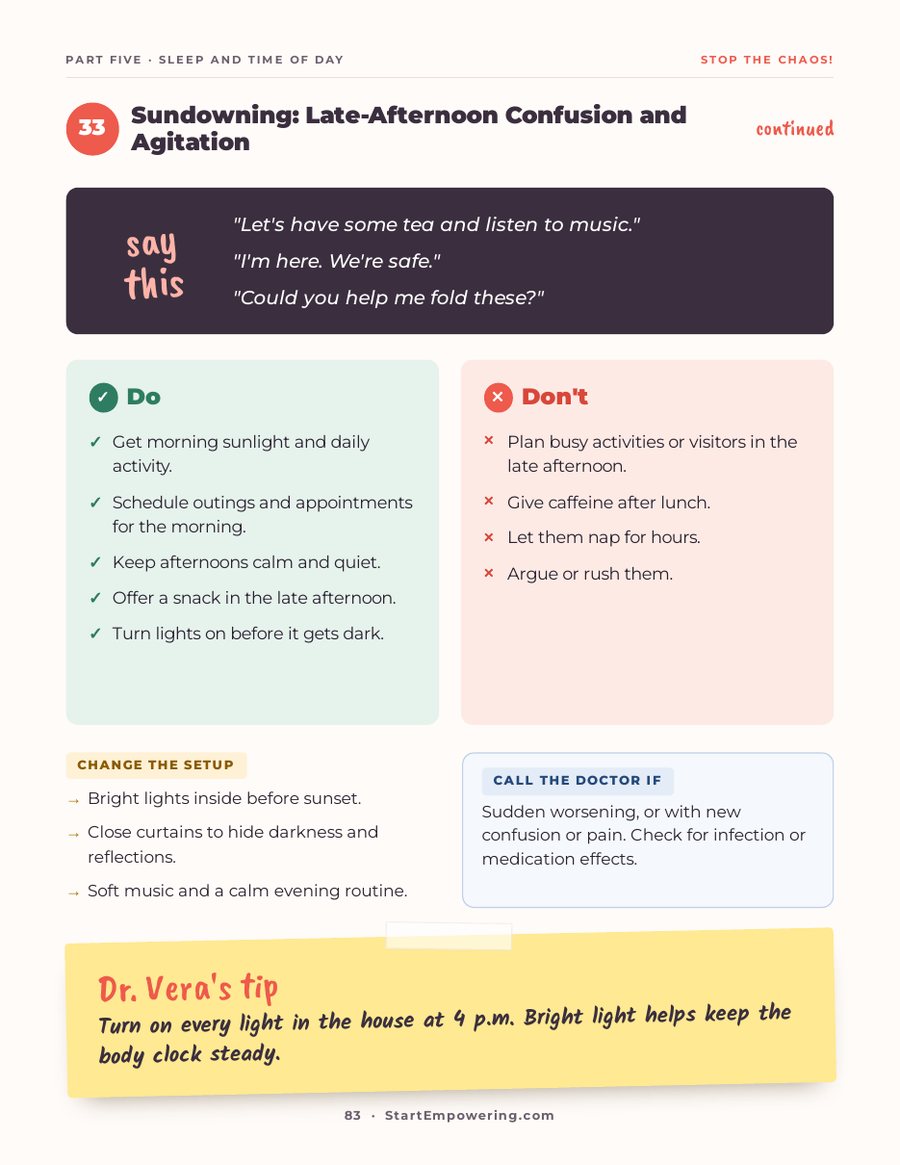
The left page gives you the fastest answer: three swaps that show what to say or do instead of the reaction that makes things worse. The right page goes deeper with more phrases, a full Do and Don't list, home changes and a tip.
Tap a page to see it full size.
- What it looks like and why it happens
- 3 "This vs. Not That" swaps, each with why it works
- More phrases to say word for word
- A full Do and Don't list, plus home changes from an OT
- When to call the doctor, and a tip from Dr. Vera
Without a plan
- You guess what to say, and it backfires
- Small moments turn into big fights
- You correct them and they get more upset
- You search online at midnight for answers
- You feel like you're failing
With Stop the Chaos!
- You open to the behavior and know what to say
- You calm the moment instead of fighting it
- You understand the message behind it
- You change the home so it happens less
- You know when it's time to call the doctor
This manual is for you if…
- You care for a parent, spouse or loved one with dementia
- You're tired of arguments that leave you both upset
- You want the exact words to say, not theory
- You need answers in 30 seconds, not a long read
- You want to keep them safe at home
It's not for you if…
- You're looking for a diagnosis or medical treatment
- You want a cure or a promise to reverse dementia
- You'd rather keep searching online at midnight
Share it with family and aides so everyone uses the same calming words.
Everything inside
Is your situation covered?
All 40 behaviors, in six parts. Find yours, then try one of the free swaps below tonight.
Safety Risks 7
- Wandering or Trying to Leave the House
- Insisting on Driving
- Falls and Unsafe Climbing or Standing
- Leaving the Stove, Water or Appliances On
- Eating or Drinking Things That Aren't Food
- Getting Lost in Familiar Places
- Unsafe Use of Tools, Knives or Medications
Care Refusals 8
- Refusing to Bathe or Shower
- Refusing Medications
- Refusing to Eat or Drink
- Refusing to Change Clothes or Wearing the Same Outfit for Days
- Refusing Help With Toileting or Incontinence Care
- Refusing to Go to Doctor Appointments
- Refusing to Brush Teeth or Groom
- Refusing Outside Caregivers or Adult Day Programs
Emotional Distress 8
- Agitation and Restlessness
- Verbal Aggression: Yelling, Cursing, Insults
- Physical Aggression: Hitting, Pushing, Grabbing
- Anxiety and Constant Worry
- Crying Spells or Sudden Sadness
- Depression and Apathy, Losing Interest in Everything
- Shadowing: Following the Caregiver Everywhere
- Fear of Being Left Alone
Confusion and Changed Reality 9
- Asking the Same Question Over and Over
- "I Want to Go Home" (Even When They Are Home)
- Asking for a Parent or Spouse Who Has Died
- Hallucinations: Seeing or Hearing Things That Aren't There
- Paranoia: Believing People Are Stealing From Them
- Accusing a Spouse of Cheating
- Not Recognizing Family Members
- Believing It's a Different Year or They Need to Go to Work
- Talking to the Mirror or the TV as if They're Real People
Sleep and Time of Day 5
- Sundowning: Late-Afternoon Confusion and Agitation
- Waking Up at Night and Getting Up
- Nighttime Wandering
- Nightmares or Waking Up Scared
- Sleeping All Day and Staying Awake All Night
Social and Personal Behaviors 3
- Hoarding or Hiding Items
- Rummaging Through Drawers, Closets and Other People's Things
- Sexually Inappropriate Behavior or Undressing in Public
Try these tonight
Say: "You seem upset. I'm right here." Not: "Calm down!"
Why: Naming the feeling calms. Commands escalate.
Say: "We're going at 2. It's written right here." Not: "I already told you!"
Why: Each time feels like the first time to them.
Turn on bright lights before 4 p.m. instead of letting the house get dark.
Why: Fading light is a major sundowning trigger.
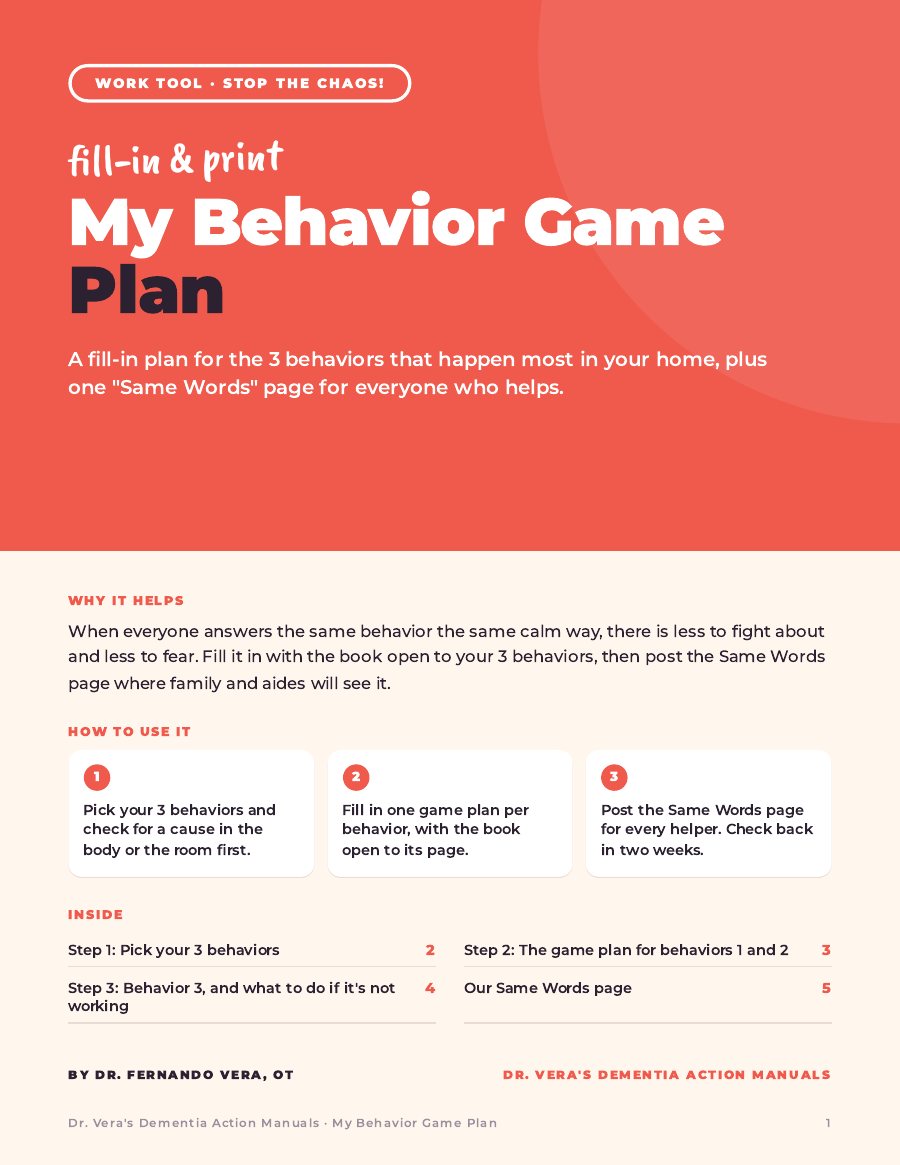
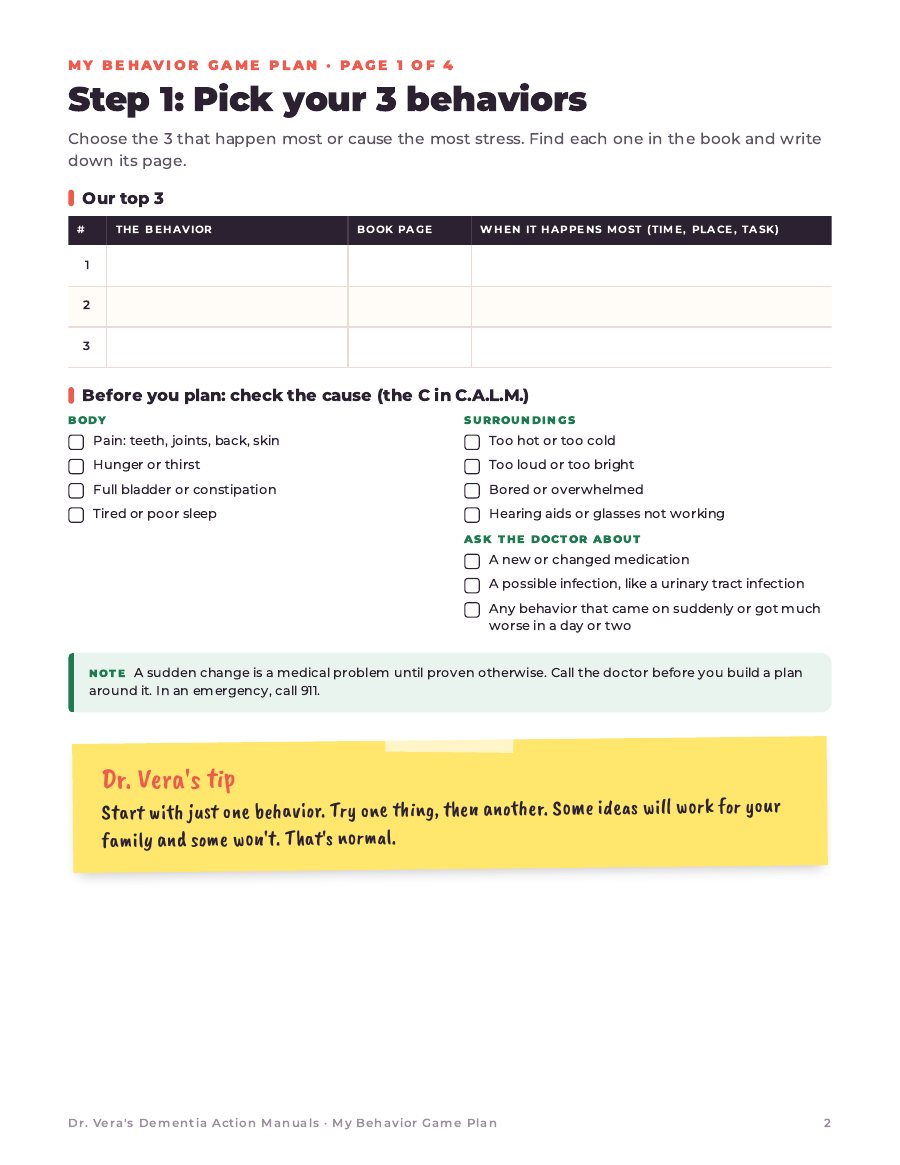
Bonus with your order
My Behavior Game Plan
A fill-in plan for the 3 behaviors that happen most in your home, plus one "Same Words" page for everyone who helps.
When everyone answers the same behavior the same calm way, there is less to fight about and less to fear. Fill it in with the book open to your 3 behaviors, then post the Same Words page where family and aides will see it.
Inside the work tool:
- Step 1: Pick your 3 behaviors
- Step 2: The game plan for behaviors 1 and 2
- Step 3: Behavior 3, and what to do if it's not working
- Our Same Words page
Fill-in PDF. Print it, or fill it in on a tablet.

Meet your guide
Dr. Fernando Vera, OT
Licensed occupational therapist and dementia educator in The Woodlands, Texas. He helps families through dementia challenges every week.
His mother, Virginia, was healthy and active when she was diagnosed with a fast-moving dementia. Even with his training, some days he didn't know what to say. These manuals are the answers he wished he'd had.
Everything you get
Stop the Chaos!
What to Say and Do to Defuse 40 Challenging Dementia Behaviors
- The complete 102-page manual
- 40 behaviors, each with a two-page spread
- 120 "This vs. Not That" swaps
- The C.A.L.M. method and a printable behavior detective log
- BONUS: My Behavior Game Plan (fill-in work tool)
$17 one-time payment · instant download
One payment. Instant download. 30-day money-back guarantee.
- 30-day money-back guarantee
- Instant PDF download
- Pay once, no subscription
Try it for 30 days. All the risk is on me.
Use it at home. If it doesn't help you handle hard moments with more confidence, email us within 30 days for a full refund. No forms, no hard feelings, and you keep the bonus work tool.
Dr. Fernando Vera, OT
Questions
Before you buy
Is this a physical book?
It's a digital PDF you can download right away, read on any device, or print at home or at a print shop.
Can I read it on my phone?
Yes. The PDF opens on any phone, tablet or computer. Keep it on your phone for hard moments and print the pages you use most.
I don't have time to read a whole book.
You don't have to. It's a manual. Open to the behavior you're dealing with and read the left page. It takes about 30 seconds.
Will it help at my loved one's stage?
The 40 behaviors range from early worries like driving to later-stage challenges like eating things that aren't food. Each page gives you words, home changes and when to call the doctor.
How is this different from free advice online?
Online tips are scattered and often generic. This is one organized manual, written by an occupational therapist who works in dementia care, with the exact words to say for 40 specific situations.
Can I share it with my family?
Yes, please share it with the family members and aides who help care for your loved one, so everyone uses the same calming words. Please don't post or resell it publicly.
Is this medical advice?
No. It's practical, educational guidance from an occupational therapist. Every behavior includes when to call the doctor, and a page on ruling out medical causes like infection, pain or a new medication.
What if it doesn't help?
You're covered by the 30-day "Calmer Days" money-back guarantee. Email us within 30 days for a full refund, and keep the bonus.
Are you ready to stop the chaos?
Stop the Chaos! plus the bonus work tool, as an instant download.
Education, not medical advice. Written by Dr. Fernando Vera, a licensed occupational therapist and dementia educator who helps families through dementia challenges.
Goes well with
More tools for the same problem.
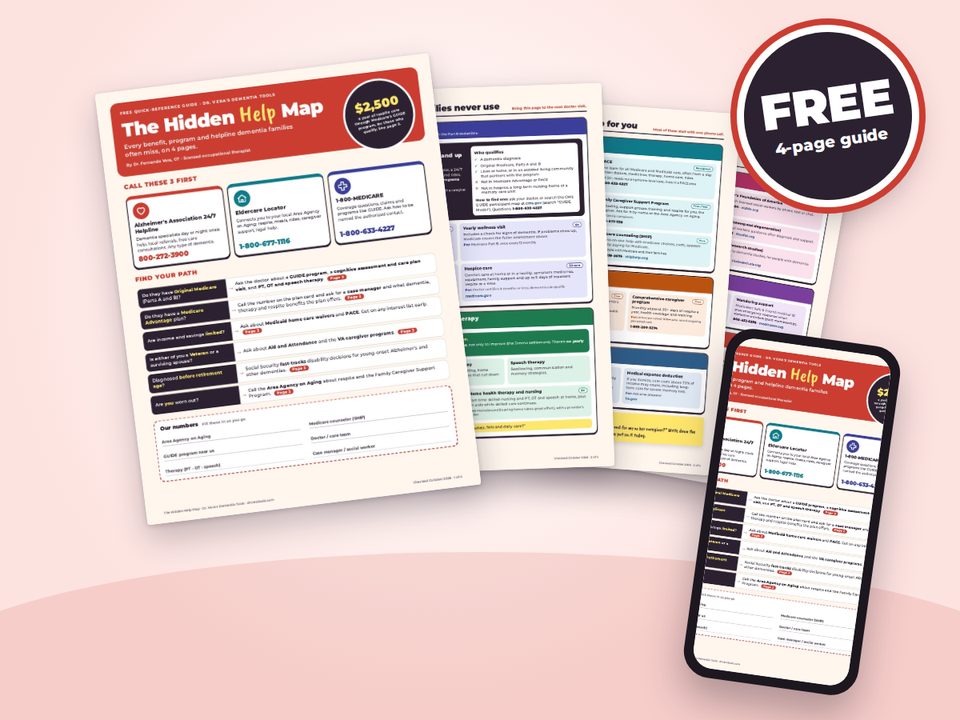 Free
Find the help you may be missing
The Dementia Resource Map
Every benefit, program and helpline dementia families often miss: Medicare's GUIDE program, VA benefits, Medicaid home care and more, in large, easy-to-read print.
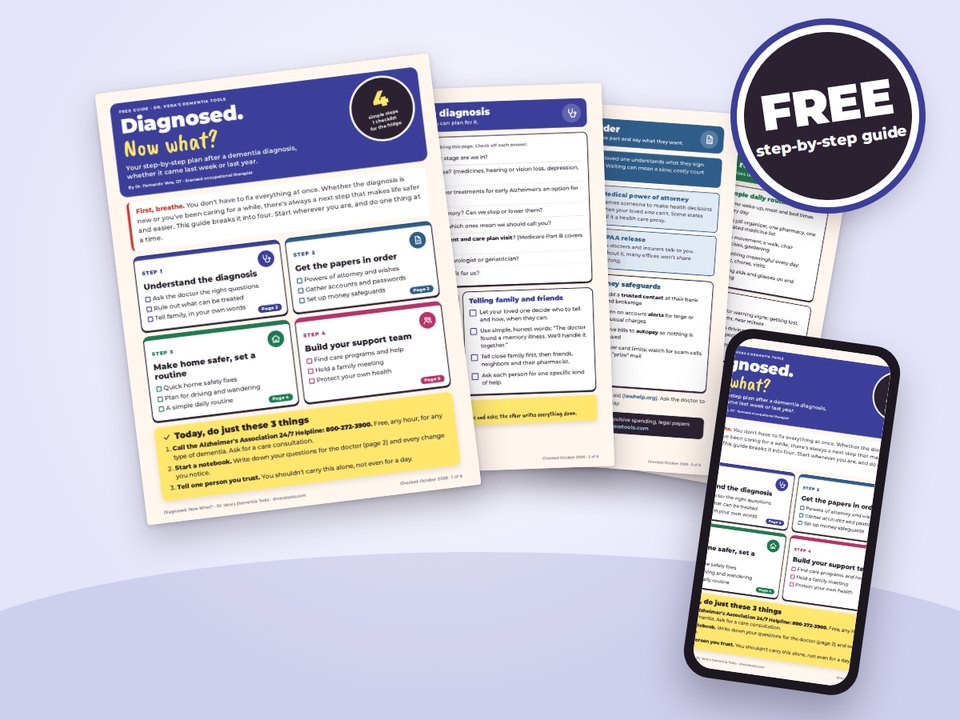 Free
Dementia diagnosis? Your next steps
Diagnosed. Now What?
A step-by-step plan after a dementia diagnosis, new or not: the doctor questions, the legal papers, home safety and the support to line up.
 Free
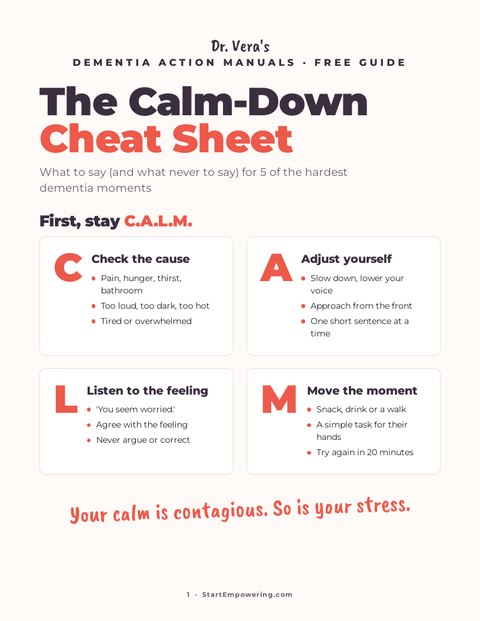
What to say in 5 of the hardest moments
The Calm-Down Cheat Sheet
What to say, and what never to say, in five of the hardest moments. Print it for the fridge.
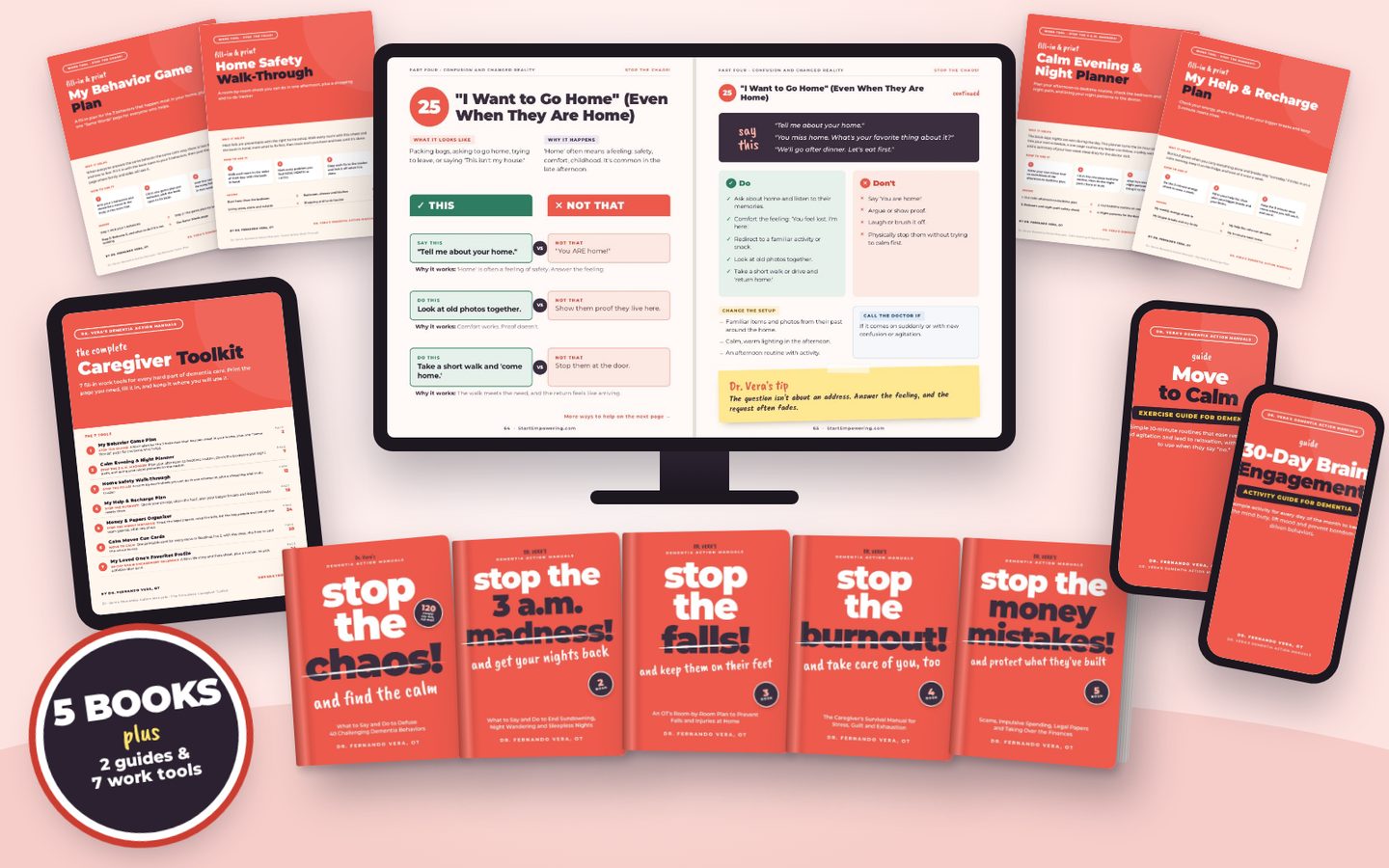
All five manuals, one for each hard part
The Five-Book Collection
All five manuals: behaviors, nights, falls, your own stress and money.